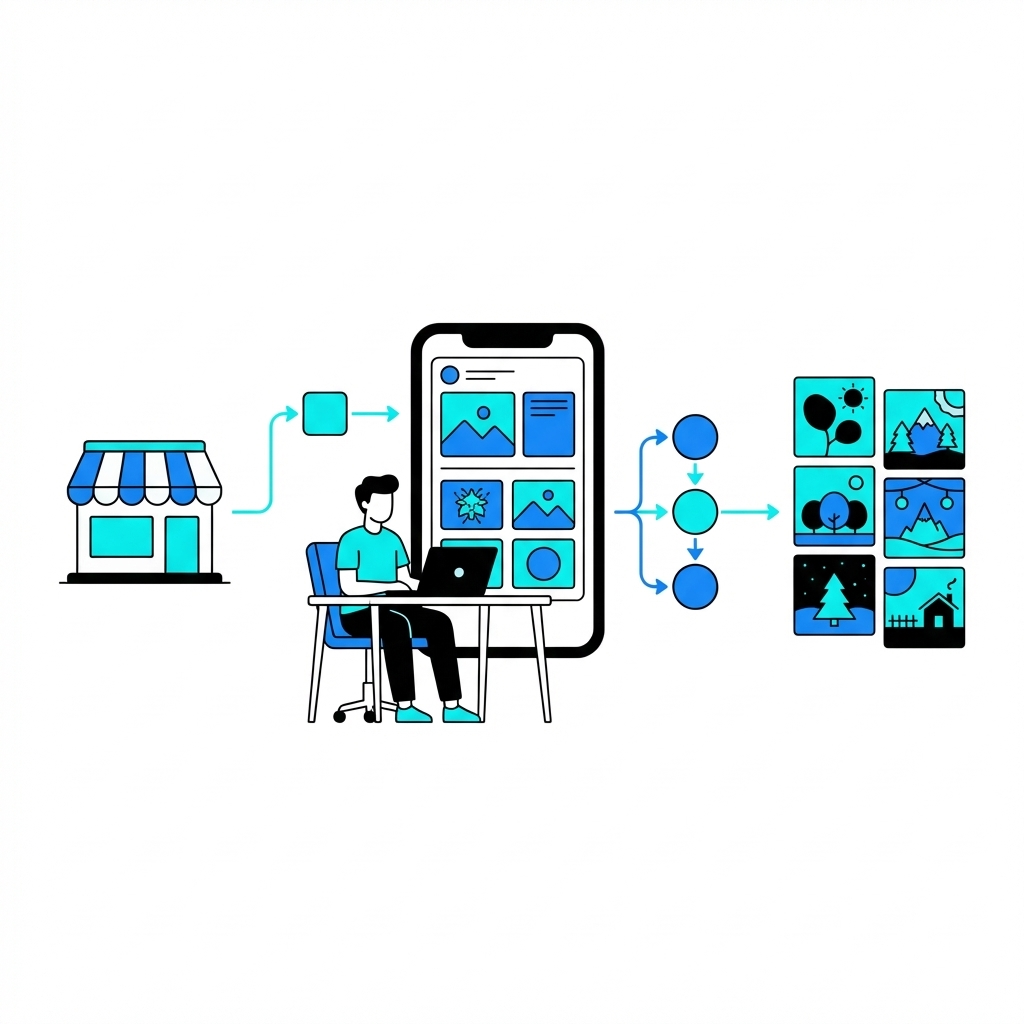
AI Image Generators for Small Businesses: Practical Use Cases
AI Image Generators for Small Businesses: Practical Use Cases
AI image generators are tools that create new images from text descriptions, reference images, or a combination of both. You may see them described as text-to-image, image-to-image, or generative design tools. Some teams use popular platforms, and others use lightweight tools or emerging options (for example, a tool nicknamed nanobanana) that focus on fast concepting and social-ready graphics.
For service businesses and local retailers, the main value is not novelty. It is the ability to quickly produce visual assets for everyday communication: promotions, seasonal posts, simple illustrations, and on-brand variations of a concept that would otherwise require design time or a photo shoot.
What AI Image Generators Actually Do (and What They Do Not)
At a high level, these systems generate pixels based on patterns learned from large image datasets. When you provide a prompt like a clean, modern flyer for a weekend promotion the tool guesses what visual composition best matches that request.
It is useful to separate a few common capabilities from common misconceptions.
Common capabilities
- Concept exploration: rapid variations of an idea (layouts, scenes, styles) to help you choose a direction.
- Lightweight marketing graphics: social images, banner concepts, simple backgrounds, and thematic visuals.
- Illustrations and mascots: playful brand elements when a literal photo is not required.
- Style consistency (to a point): some tools support style references or brand kits, though results still vary.
Common limitations
- Text rendering is unreliable: many generators still struggle with clean, accurate text inside images.
- Hands, logos, and fine details can be wrong: results may include odd anatomy, distorted products, or inaccurate brand marks.
- Rights and compliance vary by tool: terms of use, training data policies, and commercial rights differ widely.
- Output is not automatically on brand: without guidance, visuals can drift from your brand tone or audience expectations.
In business use, AI image generators are most effective when treated as a creative draft tool rather than a final source of truth.
Where AI Image Generators Fit in Real Marketing Work
Many small businesses already have a marketing workflow that includes: choosing an offer, drafting a caption, picking a photo, posting to social, and reusing the same idea in email or a website banner. AI image generators fit into the visual asset step, especially when you do not have a new photo available or want multiple versions quickly.
They can also support internal communication. Teams use visuals in SOPs, training docs, and presentations, and AI-generated illustrations can make those materials easier to scan and understand.
Use Case: Quick Social Flyers for Local Promotions
A practical example is creating a social media flyer for a short-term promotion when you do not have time to schedule a designer.
Imagine you own a bird store. You want to promote a weekend offer: 50% off nail trims. You might use an AI image generator to create a clean, friendly visual background that matches your brand style, such as a bright pet-care theme with a bird silhouette, a simple grooming motif, and space where you can place your final offer text in a separate design tool.
In this scenario, the AI image generator is not replacing your brand standards. It is helping you create a visually cohesive base image quickly, so the promotional message can be assembled faster.
Why this is a strong fit
- Speed: you can generate multiple concepts in minutes and select the closest match.
- Variety: you can test different looks (minimalist, playful, seasonal) without starting from scratch.
- Consistency: you can reuse a similar style for recurring promotions (weekly specials, seasonal events).
For many local businesses, the biggest operational benefit is reducing the bottleneck around visual creation, especially for short-lived offers where good and clear is more important than perfect.
Use Case: Humorous Brand Content and Community Building
Humor can be a practical marketing tool when it fits your audience and brand tone. AI image generators make it easier to produce light, shareable content that helps people remember you, even when you are not actively promoting a sale.
Continuing the bird store example, you might generate an image of what a birb is: a deliberately cute, silly, exaggerated bird character in a meme-like style. The goal is not realism. It is a friendly post that invites engagement and comments, which can help your account stay active between promotions.
How to keep humor brand-safe
Even neutral humor benefits from boundaries. Teams often define a few guardrails so that playful content does not create confusion or reputational risk.
- Keep it audience-appropriate: avoid edgy themes or sensitive topics.
- Stay visually aligned: choose a consistent style so posts still look like your brand.
- Clarify what is real vs. illustrative: if an image looks like a real product or animal photo, consider labeling it as an illustration when needed.
Use Case: Seasonal Campaigns Without a Photo Shoot
Many businesses run seasonal promotions but do not always have seasonal photography. AI image generators can fill that gap by producing thematic visuals: spring cleaning motifs, holiday backdrops, summer banners, or winter-themed scenes.
This is particularly useful when your actual services do not photograph easily, or when you want consistent seasonal visuals across multiple locations.
Common seasonal assets teams generate
- Backgrounds and textures: subtle patterns that make posts feel timely without overwhelming the message.
- Hero concepts: a central scene that can be reused across social, email headers, and website banners.
- Illustrative icons: small visual elements that support a theme.
In practice, many teams use AI output as a starting point, then assemble final creative in a design tool to ensure typography and brand colors remain consistent.
Use Case: Explainer Visuals for Services and FAQs
Service businesses often struggle to visually explain what they do, especially when the service is abstract (consulting), technical (automation), or process-based (maintenance plans). AI-generated illustrations can support blog posts, landing pages, and FAQs by depicting a concept clearly.
Examples include visuals that represent scheduling workflows, customer follow-up sequences, or a simplified diagram-style illustration of how an intake process works. These are not technical diagrams, but they can still help reduce friction for readers.
Use Case: Rapid Creative Variations for A/B Testing (Without Over-Claiming)
Marketing teams frequently want multiple creative options: different backgrounds, different moods, different compositions. AI image generators make it easier to create those variations. This can be useful for exploring creative direction before investing more effort into production.
It is important to keep expectations grounded: variation alone does not guarantee improved performance. However, having multiple reasonable options can make it easier to match visuals to different audiences, platforms, or seasons.
Operational Considerations: Brand, Quality, and Trust
AI-generated images can look polished, but business use still requires a basic review process. The goal is not perfection. It is making sure the image is clear, appropriate, and consistent with your brand.
Brand consistency
If your brand has a defined palette, tone, and visual style, AI output should be assessed against it. Many teams document a simple visual standard: preferred colors, preferred mood (clean, friendly, premium), and what to avoid (clutter, dark themes, busy backgrounds).
Accuracy and representation
If an image depicts a service, a product, or an animal type, check for misleading details. For example, a grooming-related graphic should not imply a procedure you do not offer. A bird image should not look unsafe or promote questionable handling practices.
Rights, licensing, and tool policies
Different platforms have different rules about commercial use, training data, and whether generated images can be used in ads. The safest approach is to treat tool selection and usage rights as part of your marketing operations, not an afterthought. If you work with regulated industries or strict brand requirements, it is also useful to confirm how images can be stored and shared internally.
How AI Image Generators Connect to Automation
AI images become more operationally useful when they are connected to repeatable workflows. For example, a marketing team might have recurring categories of posts (weekly offers, staff spotlights, seasonal reminders). Over time, the organization can build a simple system where the concept, caption format, and visual style are consistent, and only the specifics change.
This is where AI tools (text and image) can complement automation: the goal is not to produce more content. It is to reduce friction in producing the right content at the right cadence, with consistent brand cues and basic quality control.
Practical Takeaways for Business Owners
AI image generators are best understood as a flexible creative layer in your marketing toolkit. They can support promotions, education, and brand personality, especially when you need speed and variety.
- Use AI images for drafts and concepts when you need options quickly.
- Keep final messaging and typography controlled by placing text in a design tool when possible.
- Review images for accuracy and brand fit before posting or running ads.
- Prefer consistent styles so your visuals look intentional, not random.
If you are exploring how AI image generation fits into a broader marketing and automation system, Hyppo Advertising Inc. can help you think through practical use cases, governance, and workflow design. Learn more at https://www.hyppohq.ai/contact.


