Centralizing Customer Messages and Inquiries in One Place
Centralizing Customer Messages and Inquiries in One Place
For many service businesses, customer communication is scattered across emails, text messages, social media, web forms, and chat tools. This fragmentation makes it harder to respond quickly, track conversations, and understand what customers really need. Centralizing messages and inquiries in one place is becoming a foundational part of modern digital operations.
This article explains what centralized messaging means, how it works, and where AI and automation fit into the picture. The focus is not on specific tools, but on the underlying concepts that help owners and operators think more strategically about their communication infrastructure.
What It Means to Centralize Messages and Inquiries
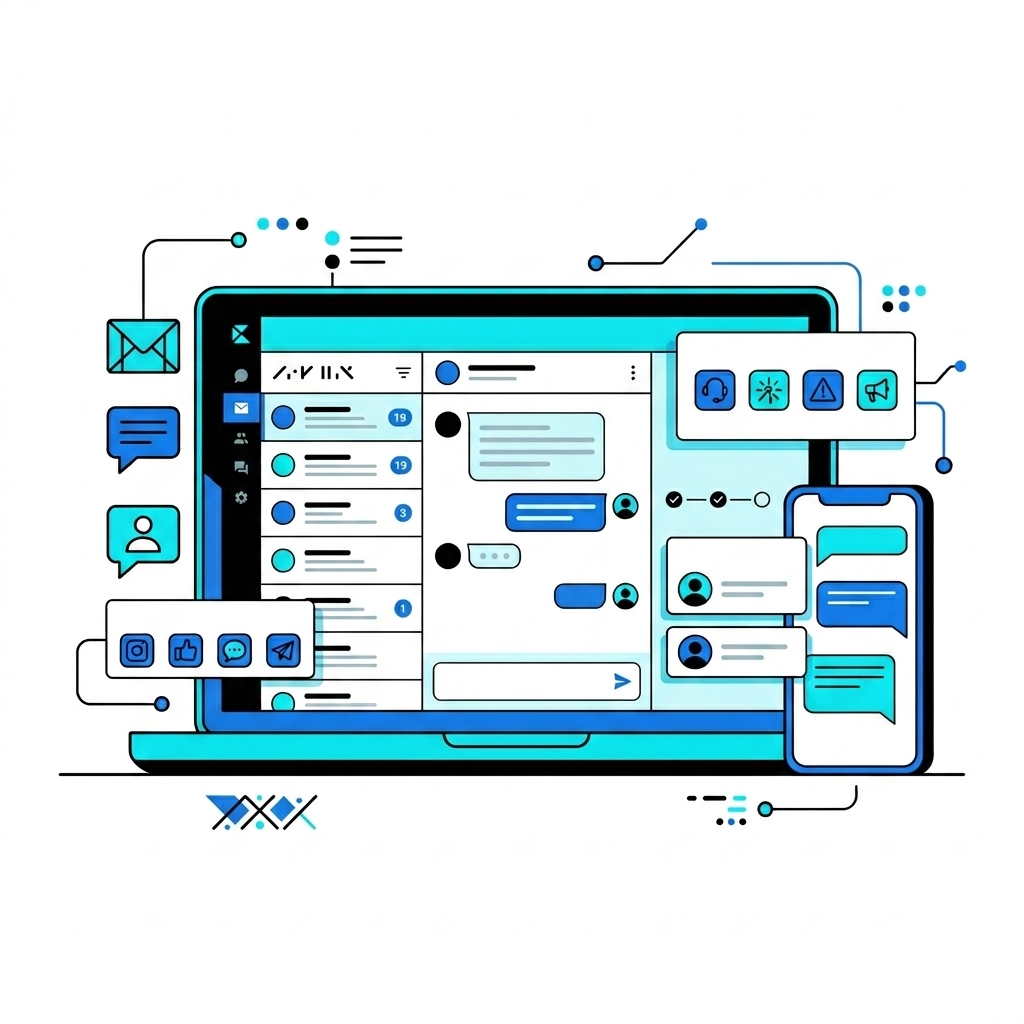
Centralizing messages and inquiries means bringing communication from multiple channels into a single, unified workspace. Instead of checking separate apps and inboxes, teams see a consolidated view of customer conversations, regardless of where they started.
In practice, this usually involves a system that connects to:
- Email inboxes used for support, sales, or general inquiries
- Website contact forms and quote requests
- Live chat and chatbots on your site
- SMS and messaging apps
- Social media direct messages and comments
- Appointment or booking system inquiries
The goal is not just convenience. A centralized view helps teams reduce missed messages, provide more consistent answers, and understand volume and patterns across all channels.
Why Fragmented Communication Creates Operational Friction
When customer communication lives in disconnected tools, it creates friction for both customers and internal teams. Owners and managers often experience challenges such as:
- Missed or delayed responses: A message buried in a social inbox or sent to a rarely checked email can sit unnoticed.
- Duplicate work: Multiple team members may respond separately to the same customer on different channels without realizing it.
- Lack of context: Without a single view of past conversations, it is harder to understand history, expectations, or prior issues.
- Inconsistent service: Different people and channels may give different information, leading to confusion for customers.
- Limited reporting: Measuring response times, volume, and common questions is difficult when data is spread across tools.
These friction points may not be obvious day-to-day, but they compound as volume increases. Centralization is about building a system that scales communication more reliably and predictably.
The Core Components of a Centralized Messaging System
A centralized messaging and inquiry system is less about a single product and more about a set of capabilities working together. At a high level, most setups include the following components.
1. Channel Integrations
Channel integrations connect your existing communication methods to one central hub. Instead of customers needing to change how they reach you, the system pulls messages from:
- Inbound email addresses (e.g., support@, info@, bookings@)
- Website forms and landing page lead captures
- On-site chat widgets or AI-powered chat assistants
- SMS numbers and messaging platforms your business uses
- Business profiles and social media direct messages
Good integrations preserve the original source of the message, so teams can see whether a conversation started via email, chat, or social.
2. Unified Conversation View
Centralization is most valuable when each customer has a unified conversation history. Instead of separate threads per channel, the system can associate interactions with a single contact record. This allows teams to see:
- Previous questions and answers
- Bookings, estimates, or orders discussed
- Preferences or constraints the customer has shared
- Internal notes and handoffs between team members
This context supports more accurate, efficient responses and reduces the need for customers to repeat information each time they reach out.
3. Routing and Assignment Logic
Once messages are centralized, the next layer is routing and assignment. This determines which team member or group handles each inquiry. Routing rules can be based on factors such as:
- Topic or category (e.g., billing, scheduling, technical questions)
- Channel or form source (e.g., sales inquiries from a campaign landing page)
- Business hours and availability
- Customer segment or account type
Clear routing and assignment reduce internal confusion and make sure inquiries do not sit unowned in a generic inbox.
4. Roles, Permissions, and Collaboration
In a shared inbox or centralized message system, roles and permissions matter. Teams benefit from features that allow them to:
- Assign owners to specific conversations
- Leave internal notes that customers do not see
- Escalate complex cases to managers or specialists
- Limit access to sensitive information where appropriate
This structure turns communication into a collaborative workflow rather than a loose set of disconnected messages.
Where AI Fits into Centralized Messaging
AI does not replace the need for a centralized system; it becomes more effective once messages are centralized. With a consolidated view of conversations and data, AI can assist in several ways.
AI for Triage and Classification
AI models can help categorize incoming messages automatically, such as labeling them as sales, support, billing, urgent issues, or routine questions. This supports automatic routing and helps teams prioritize high-impact conversations.
Over time, these models can be trained or configured to recognize patterns specific to your services, seasonal trends, or recurring issues, improving classification accuracy.
AI-Assisted Drafts and Suggested Responses
In a centralized environment, AI can propose response drafts based on past answers, internal knowledge, or documentation. Team members remain in control, reviewing and editing before sending, while AI reduces the time spent composing repetitive replies.
Because the system has context on previous interactions, suggestions can reflect prior commitments, preferences, or details the customer has already shared.
AI-Powered Self-Service and Deflection
When integrated with centralized messaging, AI chat assistants or virtual agents on your website can answer common questions and capture structured information before handing the conversation off to a human. For example, they might collect contact details, service location, preferred time windows, or basic troubleshooting steps.
Centralization ensures that when a human takes over, they see the full interaction history including what the AI assistant already covered, avoiding duplicate questions and improving continuity.
Key Benefits for Service Businesses
While every operation is different, many service businesses see similar types of benefits from bringing all customer messages and inquiries into one place.
Improved Responsiveness
With inquiries consolidated into a central queue, it becomes easier to monitor workload, assign owners, and track follow-ups. Teams are less likely to overlook a message hidden in an individual inbox or a social media app.
More Consistent Customer Experience
A unified view of conversations and better collaboration tools help keep messaging consistent, even as different team members handle inquiries. Standard replies, internal notes, and AI-assisted drafts can all contribute to a more predictable experience.
Better Visibility and Reporting
When data is centralized, it is easier to answer questions such as:
- How many inquiries are we receiving across all channels?
- What are our average response and resolution times?
- Which topics or services generate the most questions?
- Which marketing campaigns are generating the most inquiries?
These insights support more informed decisions about staffing, training, service design, and marketing spend.
Stronger Foundation for Automation
Centralization creates a clear, consistent entry point for future automation. Workflows such as automated acknowledgments, status updates, or follow-up messages depend on having a reliable view of new and open inquiries.
As businesses mature, they can layer additional automations on top of this foundation, connecting messaging with scheduling tools, CRMs, billing systems, or operations software.
Design Considerations and Trade-Offs
Centralizing messages and inquiries is a strategic decision, and it comes with practical considerations and trade-offs to think through.
Balancing Control and Flexibility
A highly centralized system can improve control and oversight, but it may require teams to adjust existing habits and workflows. Business owners often need to balance the structure of a shared hub with the flexibility that individual team members value in their personal inboxes or devices.
Data Quality and Contact Records
The value of a unified conversation view depends on accurate contact matching and data hygiene. If multiple records exist for the same person or business, context may still be fragmented. Periodic clean-up and clear processes for handling duplicate or incomplete records can help maintain data quality.
Change Management and Training
Even well-designed systems require thoughtful rollout. Teams may need training on how to route, assign, document, and close conversations in the new environment. Clear expectations, simple workflows, and gradual adoption can make centralization more sustainable.
Looking Ahead: Messaging as a Strategic Asset
For many service businesses, customer messaging has historically been treated as a reactive function: respond when something comes in. As communication channels multiply, centralizing messages and inquiries in one place turns that reactive function into a more strategic capability.
With the right foundation, owners and operators can:
- Understand demand and customer expectations more clearly
- Align staffing and capacity with real communication volume
- Identify recurring questions that suggest gaps in information or processes
- Use AI and automation in targeted ways, grounded in actual data
Centralization does not guarantee specific outcomes, but it can provide a more stable, measurable environment for improving service quality over time.
If you are exploring how AI and centralized messaging could fit into your operation, you can learn more or start a conversation with the team at Hyppo Advertising Inc. by visiting https://www.hyppohq.ai/contact.


