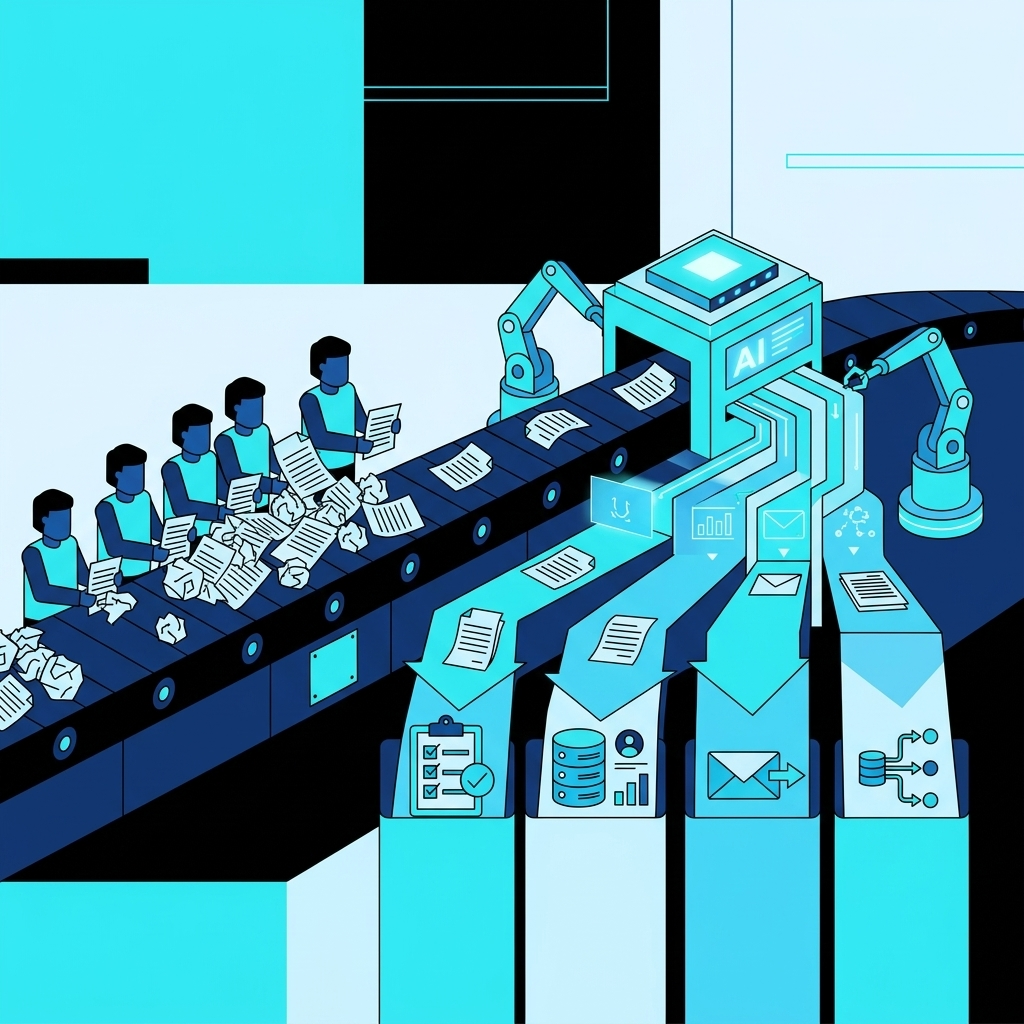
Why Hiring Alone Doesn’t Fix Operational Problems
Why Hiring Alone Doesn't Fix Operational Problems
Many service businesses reach a familiar breaking point: work piles up, customers wait longer, the team feels stretched, and leadership decides it's time to hire. New roles are created, job posts go live, and headcount grows. Yet a few months later, the same issues remain—just with more people involved.
This pattern is common, and it can be expensive. Hiring is essential for growth, but hiring alone rarely fixes underlying operational problems. If the work itself is unclear, inconsistent, or dependent on a few key people, simply adding more staff can actually amplify the chaos.
This article breaks down why that happens and how to think about operations, systems, and AI-powered automation in a more structured way—so that hiring supports your operations instead of trying to replace them.
Headcount Is a Symptom, Not a Strategy
When business owners feel overwhelmed, the most visible constraint is usually time. There are more tasks than hours, and the natural conclusion is, We need more people. Sometimes that is true. But often, the deeper issue is how work flows through the business.
Operational problems usually show up as:
- Tasks getting stuck with one person or one department
- Inconsistent customer experiences and outcomes
- Rework due to missing or incorrect information
- Confusion about who owns what and what done really means
- Manual, repetitive admin work that slows everything down
These problems are about structure, clarity, and design—not just capacity. Adding another person into a poorly designed workflow is like adding another car to a traffic jam. The congestion gets wider, not faster.
People vs. Systems: Different Levers, Different Jobs
People and systems solve different kinds of problems in your business.
What People Are Good At
Human team members are strongest where judgment, nuance, and relationships matter. That includes:
- Handling unique or complex customer situations
- Making trade-offs and decisions with incomplete information
- Building trust, explaining options, and calming concerns
- Designing and improving processes with context from the field
If your operational issues come from unclear decisions, lack of ownership, or gaps in leadership, hiring can help—if those roles are clearly defined and empowered.
What Systems Are Good At
Systems—whether simple checklists, structured workflows, or AI-powered automation—are strongest where consistency and repeatability matter. That includes:
- Ensuring every step in a process happens in the right order
- Capturing and moving data between tools and teams
- Standardizing communication triggers and follow-ups
- Reducing manual re-entry of information and copy-paste tasks
When your operational problems are rooted in chaos, inconsistency, or missing information, systems and automation often provide more leverage than more hires.
Common Signs That Hiring Is Masking Operational Gaps
Businesses rarely say, We have a systems problem. They say, We're drowning in work, or, Our team is maxed out. Below are patterns that often indicate structural issues rather than pure staffing shortages.
1. Each New Hire Gets a Unique Version of the Job
If every person in the same role works differently, you don't just have a capacity problem—you have a consistency problem. Without standard workflows, checklists, and clear expectations, each new hire invents their own mini-system. That can feel flexible in the short term but becomes difficult to manage, train, and scale.
2. Work Relies on Heroic Effort
When key outcomes depend on a few hero employees who remember everything, chase everyone, and hold the entire process together, the business is fragile. Hiring more people often just creates more dependencies on informal knowledge unless that knowledge is converted into shared systems.
3. Reporting and Visibility Are Limited
If you can't easily answer questions like, Where is this job in our process? or How many days does it usually take to move from inquiry to invoice? then your issue is likely information flow, not just workload. Without visibility, management decisions become guesswork, and hiring decisions follow the same pattern.
4. New Hires Spend Most of Their Time on Repetitive Admin
When new team members quickly fill their days with copying data between tools, chasing missing information, and sending the same messages over and over, you're paying for manual labor that systems and automation can often handle more reliably.
How AI and Automation Change the Capacity Equation
Modern AI and automation tools don't replace the need for people, but they do change where human capacity is most valuable. In many service businesses, a significant portion of operational workload is predictable, structured, and rules-based—exactly the kind of work automation can support.
Examples of Operational Tasks Automation Can Support
- Capturing and routing new inquiries from forms, email, or chat
- Enriching or validating customer information before it reaches the team
- Triggering standard communications based on status changes
- Updating job statuses and internal notes automatically
- Summarizing long email threads or customer histories for quick review
By taking repetitive tasks off your team's plate, automation can create meaningful capacity without adding headcount. That capacity can then be used for higher-value work: problem-solving, quality control, client relationships, and improvement of the underlying processes.
Why Systems Should Come Before Scaling the Team
From an operational design perspective, building or refining systems before adding people has several advantages.
Clear Roles and Expectations
When your core workflows are defined—who does what, in what order, with what information—job descriptions become more concrete. You can hire for specific responsibilities, train faster, and measure performance against clearly understood outcomes.
Consistent Customer Experience
Systems help ensure that each customer moves through a similar journey, regardless of which team member they interact with. This doesn't remove flexibility; it provides a baseline. AI-driven tools can even adapt messaging or timing based on customer data while preserving a consistent underlying structure.
Better Use of Human Strengths
When repetitive work is automated and processes are defined, people can focus on the parts of the job that require empathy, judgment, and creativity. This often leads to better service quality and less burnout than expecting staff to perform both high-skill and low-skill work all day long.
More Reliable Data for Future Decisions
Operational systems and automation tend to generate structured data: timestamps, conversion rates between stages, task completion patterns, and more. This data is essential for deciding when you truly need to hire, which roles to prioritize, and how to measure impact over time.
Hiring as a Force Multiplier, Not a Band-Aid
None of this means you shouldn't hire. Growing businesses inevitably need more people. The key shift is to think of hiring as a way to amplify well-designed systems, not patch over missing ones.
In a system-first approach:
- Workflows are mapped and clarified before roles are filled
- Automation handles predictable and repetitive steps
- Team members are hired to manage exceptions, build relationships, and improve the system
- Leaders have data to understand workload and performance
In that environment, each new hire can contribute more value, more quickly, because they are stepping into a structure that supports their work rather than improvising from day one.
Thinking About Your Own Operations
For many service businesses, the hardest part is simply seeing operations as a design problem rather than a staffing problem. A few reflective questions can help clarify where you stand:
- Which recurring tasks consume most of your team's time each week?
- Where do handoffs between people or tools break down most often?
- How much of your process lives in people's heads instead of in shared systems?
- What would you need to see in your data to be confident you truly require more headcount?
These are not diagnostic checklists or step-by-step instructions, but starting points for better operational conversations inside your business.
The Role of Partners in Modern Operations
Designing systems, selecting tools, and implementing AI-driven automation can be complex, especially for teams already at capacity. Many service businesses choose to work with external partners who specialize in operations, automation, and data flow so their internal team can stay focused on delivering value to customers.
An effective partner doesn't just introduce new technology. They help connect your strategic goals with the everyday workflows, touchpoints, and data that make up your operations. The result is not just more tools but a clearer, more resilient way of working that supports both your people and your customers.
If you'd like to explore how AI, automation, and better operational design could support your existing team—without relying on hiring alone—you can reach out to Hyppo Advertising Inc. to start a conversation. Learn more or contact the team here.


